Jeff Sullivan in this very space on January 19, 2006:
We know an awful lot about pitchers. We know how hard they throw, how many batters they strike out, what kinds of pitches they have, and whether their deliveries are fluid and easy or violent and rough. This is all objective and indisputable information that has a lot of value when it comes to projecting a pitcher's future health and success.One thing we don't know much about, though, is the consistency of a pitcher's release point. The fact that we don't have a good way of measuring what's arguably the most important part of being a good pitcher is one of the more ironic twists of modern analysis.
Well, by 2007, PITCHf/x had become all the rage. The data is available now, but I'm not sure how widely release points have been studied.
PITCHf/x estimates the ball's location at a mark 50 feet from home plate. Pitchers often shift their spot on the rubber, resulting in variations of the horizontal component of the release point. This doesn't doesn't necessarily mean that the pitcher isn't repeating his delivery, though. Therefore, I decided to only look at the vertical component. Furthermore, some pitchers use different arm slots for different pitch types, and curveballs have a higher initial trajectory than fastballs. My methodology was the find the standard deviation of a pitcher's vertical release point for the fastest 20% of his pitches. Since cameras are calibrated ever so slightly differently in every ballpark, and even in every series to some extent, I looked at pitchers at both the season and game level.
While intuitive reasoning would suggest release point consistency is automatically a positive, I didn't immediately notice anything that would allow for such a broad claim. Still, I did see how release point consistency correlates with some other things.
Pitchers with lower arm slots have more trouble with release point consistency. This makes sense because pitchers with low arm angles tend to be less skilled and practiced than more traditional over-the-top pitchers. The sidearm motion could be naturally harder to repeat. It could also be a PITCH/x issue. Higher variance in release points coincide with higher variance in movement and velocity as well.
On to some examples. Javier Lopez, a sidearmer, is the worst at maintaining a consistent release point.
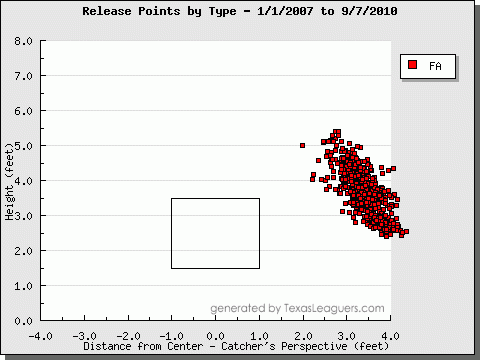
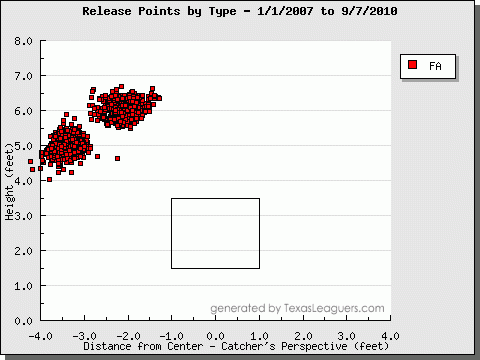
Perhaps he's changing his arm slot intentionally. Jose Contreras has been an effective pitcher who deals from multiple release points. Unlike Lopez, though, Contreras has separate, consistent release point clusters, which makes it easy to see that it is part of his approach.
And now for something different, Alberto Castillo:
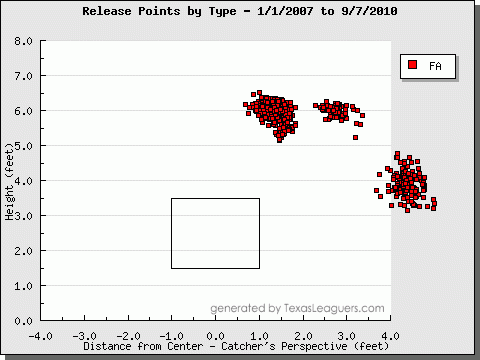
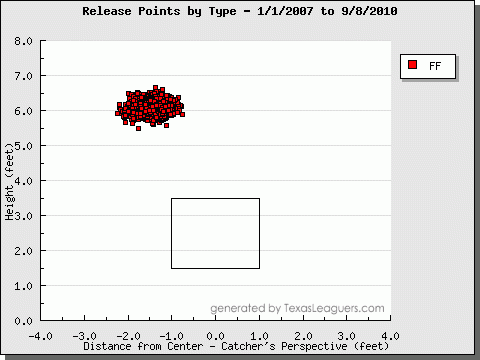
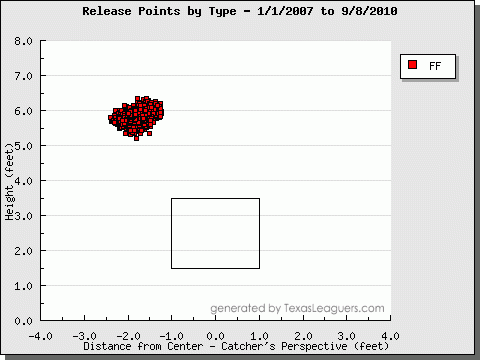
David Huff is a good example of a pitcher who has a very consistent release point.
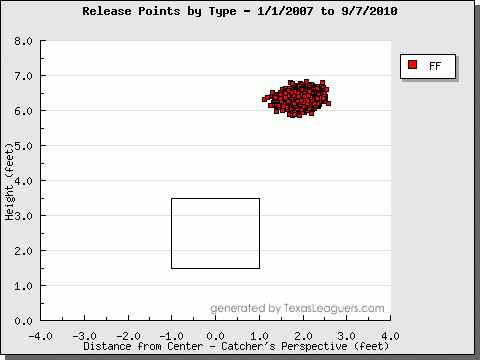
In fact, Frank Viola said in 2009, ""Huff has textbook mechanics. Everything is right there. His release point is consistent with all his pitches."
Chris Carpenter and Kevin Slowey have consistent release points, too.